Hi there. I’m June, a design leader originally from Korea, now based in the Bay Area.
I was a huge gamer as a kid. Arcade games like Space Invaders felt like actual magic, and I wanted to be part of whatever made them. That is how I ended up at KAIST, studying industrial design. The little game up there is real, by the way. Click it if you want a turn.
Last Christmas I started vibe coding, and felt that same magic again. A few prompts, and a little arcade game was just running. What got me wasn’t the game. It was how short the distance between an idea and a working product had become.
Once you can build the thing you imagined, design stops being about drawing it. It becomes about deciding what is worth building at all.
I have been vibe coding almost every day since, until I could take a real, complicated product from idea to shipped mostly on my own. Technology has surprised me twice now: once as a kid, and once as an adult who should be harder to impress. And I want every designer I work with to get to feel like this too.
My path has never been a straight line, and I have stopped apologising for it. An agency I founded in Seoul that won the country’s top web award twice, an MBA at Michigan where I was usually the only designer in the room, consulting for Fortune 500 brands, consumer products, then seven years of enterprise SaaS in cybersecurity and DevOps. On paper, five different careers.
It has never felt like that from the inside. Each one taught me something the next one needed, and none of it went away. It compounds into judgment: accumulated context, the same pattern wearing different clothes, a fair number of wrong calls, and slowly learning what matters.
One theme followed me through all of it: trust. Sometimes literal, like in cybersecurity. Sometimes quieter, like trusting a recommendation, an insight, an AI-assisted decision. And sometimes it is the team itself. Building one where people genuinely trust each other is the part I care about most, because everything else rests on it.
Trust matters more now than it used to. When a product can produce an answer in a second, the answer stops being the valuable part. Whether you can believe it is. A system people don’t trust gets checked by hand, or quietly switched off, and all that speed turns into nothing.
That is closest to what I believe about leading. A design leader’s job is not to make the decisions, but to raise the quality of the decisions everyone around them is making. Clarity, so the direction is obvious. Systems that carry it further than any one person can. Judgment that keeps growing. And staying close enough to the craft to know when something is going wrong. I would rather my designers get good at creating direction than at following mine.
AI makes that more urgent, not less. It scales output almost overnight, and judgment does not scale that way, so it has to be grown on purpose. The question is no longer what AI can do. It is what AI should decide, and what should stay human.
You can’t lead AI-native design from the sidelines. You have to build with it.
So I do. Most of that goes into Aestheria ↗︎, a design context layer for AI coding agents, now in beta with a small group of testers. It keeps me honest about the medium I am asking teams to work in.
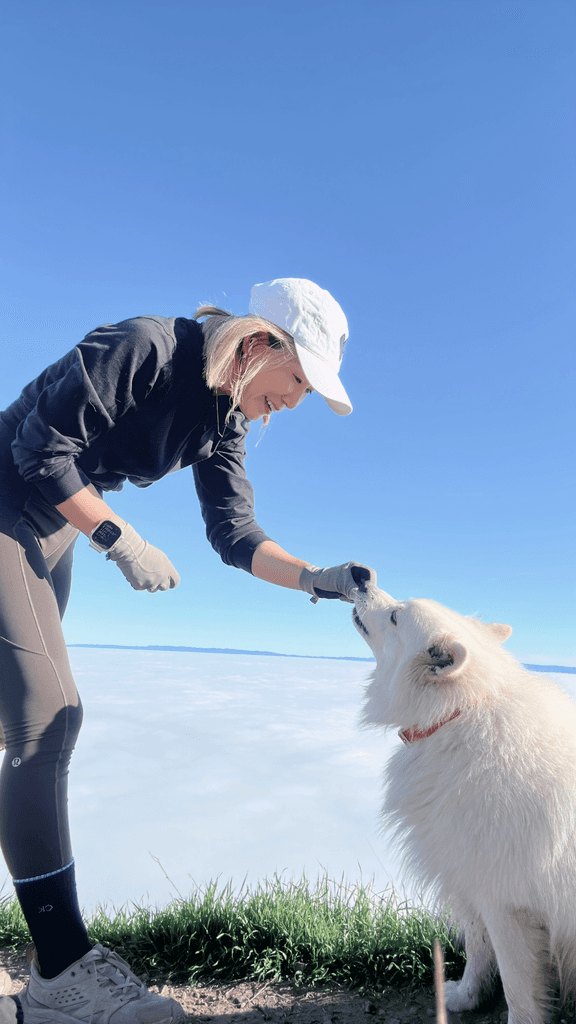
The rest of my time belongs to three cats and one dramatically fluffy white dog, who have made it very clear that my schedule is negotiable. I’ve always loved building things, and I am still excited about whatever I get to build next.
Design Leader · Founding Designer · AI-Native Design Systems
Design leader with 12+ years shaping products, brands, and systems across consumer tech and enterprise B2B SaaS. A full-stack practitioner, fluent across the whole discipline: product vision, UI/UX, research, design systems, brand.
7+ years in cybersecurity, with a proven specialty in setting product vision that drives roadmap, building design teams from the ground up, and turning complex, high-stakes problem spaces into clear, usable product, executed repeatedly at Harness, Panther Labs, and Exabeam.
An AI-native design leader, with several AI products in flight at once, each carried from idea to working software. A founding designer by instinct: equally at home setting the vision and building the thing that proves it.
Aestheria.design · Jan 2026 – Present
An independent venture building design infrastructure for teams shipping with AI coding agents. Founding designer and sole builder.
Building Aestheria, an AI-native design system for entrepreneurs and startups shipping with vibe-coding workflows, engineered around a synchronized tokenization system that keeps design decisions under unified control across every generated surface.
Harness · May 2024 – Dec 2025 · Series E
An AI-native software delivery platform spanning CI/CD, security testing, and cloud cost management.
Built and led a high-performing UX team of five, scaling the vertical I led from two modules to seven — roughly 30% of total company revenue — across secure application delivery (AppSec and DevSecOps).
Panther Labs · Dec 2022 – Apr 2024 · Series B
A cloud-native SIEM built for detection engineering at security-team scale.
Led the Correlation Rules design, driving a $1 million reduction in churn and a notable increase in customer retention.
Spearheaded Data Lake Search, consolidating three siloed search experiences into a unified flow with NLP-powered features and an interactive visualization summary.
Exabeam · Apr 2019 – Dec 2022 · Series B →︎ D
A security operations company known for user and entity behavior analytics.
Facilitated collaborative UX design workshops with executives and senior product leaders, aligning the TDIR product roadmap with a unified strategic vision.
Developed and secured a design patent for MATE, a graph-based tool leveraging the MITRE ATT&CK framework to detect and thwart multi-stage cyberattacks.
Spearheaded a new Alert Rank system for Alert Triage, leading a team of two designers; the work earned a 2022 Innovation by Design Award nomination from Fast Company.
Chegg · 2015 – 2018
A direct-to-student education company: textbooks, homework help, and tutoring.
Led the chat-based tutoring vision and a scheduler redesign at Chegg Tutors, significantly increasing scheduled lessons.
Logitech · 2014
A Swiss-American maker of computer peripherals and connected consumer hardware.
Led the design of an IoT mobile app experience for Circle, an in-home security camera, and developed companion app concepts for Bemo and UE Boom.
The agency and consulting years, before product.
Founded and ran Dei Communication, a Seoul web agency serving Korean enterprise brands — work that took two Grand Prizes at Web Award Korea, the country’s top award for web work, and a Silver Prize at the Incheon International Design Award. Later advised Fortune 500 brands on e-commerce performance at MotionPoint.
University of Michigan · Stephen M. Ross School of Business
A top-ten US business school, known for strategy and social enterprise, and for rigorous live projects run inside major US companies.
KAIST · Daejeon, South Korea
Korea's top science and technology school: the national institute, where industrial design is taught inside an engineering school.